An antenna request: distinguish an exclusive-use area from shared building space
An antenna rule can be misunderstood as either a complete ban or permission to attach equipment anywhere. Begin with the actual device and the area proposed for it. A focused request distinguishes exclusive-use property from common space and physical work, while leaving federal-rule coverage and technical suitability to appropriate current guidance and qualified review.
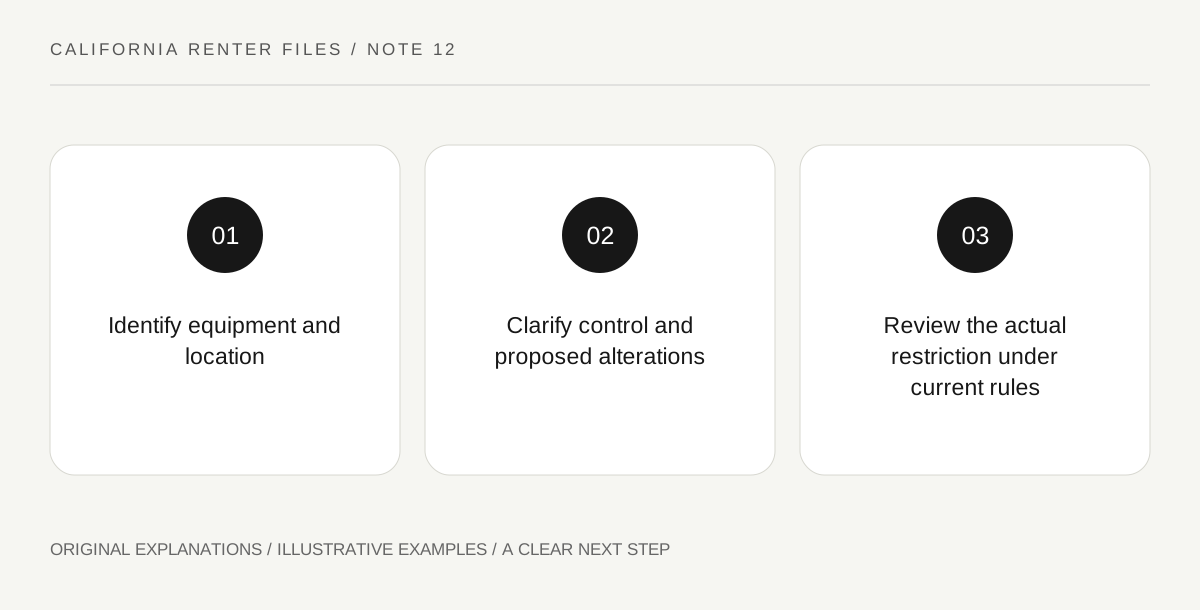
Original explanatory diagram. Read the full method and limitations below.
Use the federal rule’s limited context
FCC material describes OTARD protections for certain antennas in qualifying areas within a user’s exclusive use or control and a relevant ownership or leasehold interest. That is a conditional scope, not blanket installation permission for every device or surface. Identify the actual equipment and proposed location before discussing a general right. This article does not determine whether a specific antenna, restriction or property arrangement meets the rule, and it provides no installation or drilling instructions.
Describe the proposed area accurately
Use the agreement and building information to distinguish a private balcony or other claimed exclusive-use area from a roof, corridor or shared facade. Do not infer legal control merely because only one household normally uses a corner. Record any uncertainty rather than choosing a label that makes the request seem easier. A photograph can illustrate the proposed location, taken appropriately, but cannot establish property rights or structural capacity by itself.
Separate device placement from physical alteration
State whether the proposal involves attachment, wiring, penetration or another change requiring further review, without carrying out the work first. Ask the actual provider and responsible building contact about the process. Do not assume protection for a device makes every proposed mounting method lawful, technically suitable or exempt from relevant safety concerns. A coverage question and an installation design are different tasks. Keep both with the appropriate qualified sources rather than letting a retailer’s assurance settle the entire arrangement.
Ask a narrow question about the restriction
Preserve the relevant rule, agreement language and written response. Ask an appropriate adviser or FCC resource how the current rule applies to the actual device and area. This guide supplies no enforcement demand or remedy. The useful outcome is a proposal concrete enough to review: equipment identity, location, control of the area and the physical work contemplated. That is more informative than arguing about a universal right to a dish while leaving every material fact unspecified.
Illustrative renter file
Illustrative proposal: a renter identifies a particular antenna and a proposed balcony location. The agreement’s control language is unclear, and the intended attachment would alter a surface. Both issues are listed for appropriate review before work. The renter does not install on a shared roof, assume a retailer has decided legal coverage or treat a favorable general rule as approval of a mounting method.
Questions that come up
Does OTARD mean any antenna may go on a common roof?
No blanket permission is supplied here. The rule’s scope includes specific device and property-area conditions that need review.
Can a general protection replace a technical installation assessment?
No. Legal scope and a suitable physical arrangement are different questions. This article supplies no mounting method or structural approval.
References and scope
These sources support the factual background. Examples and exercises are original illustrative teaching material. References do not imply endorsement.
- FCC: 2024 Declaratory Ruling FCC 24-25 — The conditional OTARD scope involving certain antennas and qualifying exclusive-use/control areas; no device-specific legal or installation determination.