An immigration-related housing threat: preserve the words without spreading private information
A housing communication that invokes immigration or citizenship can create fear beyond the rental dispute itself. Preserve the actual words and seek appropriate help while keeping sensitive information private. A focused record can identify the housing conduct at issue without turning a complaint into an unnecessary collection of family members’ documents or a public account of their status.
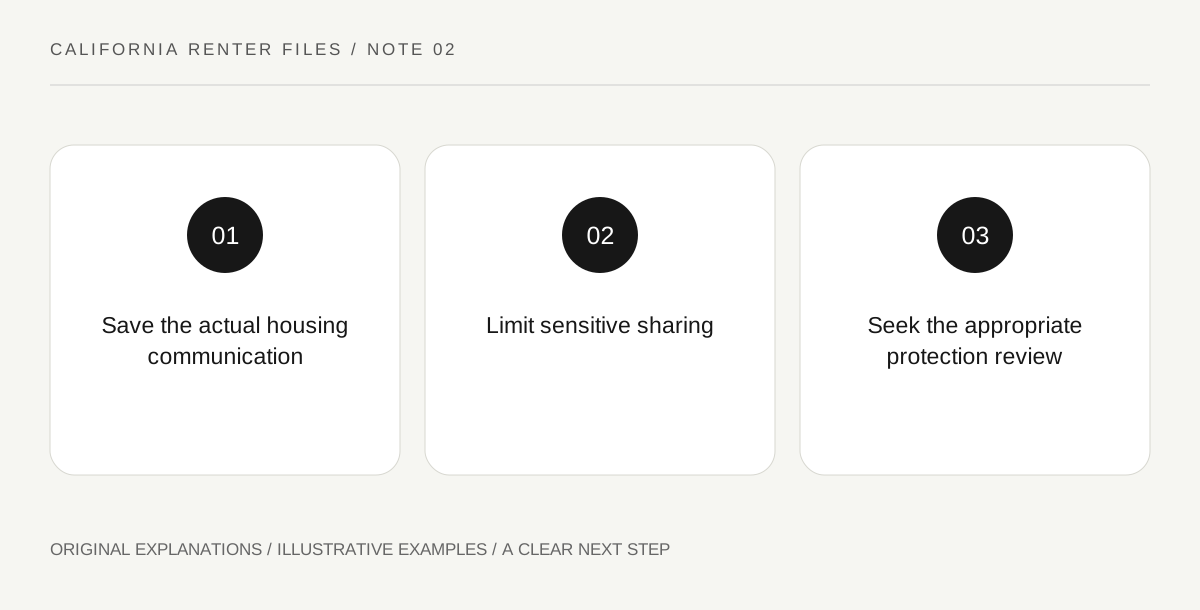
Original explanatory diagram. Read the full method and limitations below.
Use the official protection context
California’s Attorney General describes protections against immigration-status discrimination and against threats to disclose status to pressure a tenant to leave. This supplies a reason to seek informed assistance, not a conclusion about every request for identification or every housing program. Record the exact communication and the action requested. Do not assume you must prove a person’s status to understand whether a housing threat deserves review. The question concerns the conduct and applicable protection, with exceptions and circumstances assessed by qualified help.
Preserve the original communication
Save the message, letter or other existing record with date, sender and the relevant housing context. If reporting a spoken statement, write a contemporaneous note identifying it as your recollection. Do not manufacture a quotation or secretly record a conversation based on this article; recording law is a separate issue. Keep the original file intact and create a short factual chronology. Distinguish what was said directly from what another person later reported.
Limit the information shared
Use the responsible agency’s or adviser’s official intake process and ask what documents are actually needed. Do not send passports, immigration papers or relatives’ identifying details through a neighborhood group simply because someone offers to help. A public post can spread sensitive information without improving the legal record. A trusted supporter may help organize the file with permission, while the people affected retain control over what they share through an appropriate route.
Separate immediate safety from the legal file
If there is an immediate threat to safety, address it through appropriate emergency or support services rather than completing paperwork first. For the housing question, seek timely qualified advice and use the Attorney General’s or Civil Rights Department’s official resources. This article does not determine immigration status, a case outcome or an eviction response deadline. The file’s role is to preserve the conduct accurately and direct it to responsible help, without making fear itself a reason to disclose more than the process requires.
Illustrative renter file
Illustrative record: a tenant receives a message connecting a demand to leave with a threatened disclosure about a household member. They save the original and note its rental context. A qualified intake service explains what is needed; no relatives’ documents are posted publicly. The file preserves the message without assigning an immigration status, inventing a spoken quotation or deciding the legal remedy.
Questions that come up
Must a public complaint reveal everyone’s immigration documents?
Do not assume that. Ask the responsible agency or adviser what is needed through its official private process, and avoid unnecessary disclosure.
Does this article decide whether a specific request violates the law?
No. It identifies an official protection context and a way to preserve facts. Coverage, exceptions and remedies need case-specific review.
References and scope
These sources support the factual background. Examples and exercises are original illustrative teaching material. References do not imply endorsement.
- California Attorney General: Landlord-Tenant Issues — Immigration-related housing discrimination and prohibited status-disclosure threats; no personal immigration advice or case determination.