A rental smoking rule: identify the places and the version that apply
A sign saying no smoking may leave questions about which places it covers and how it relates to the rental agreement. Read the actual rule and its version instead of assuming one statewide arrangement answers every property. This guide organizes a location-and-document comparison, without deciding enforceability, prescribing a lease change or giving personal health advice.
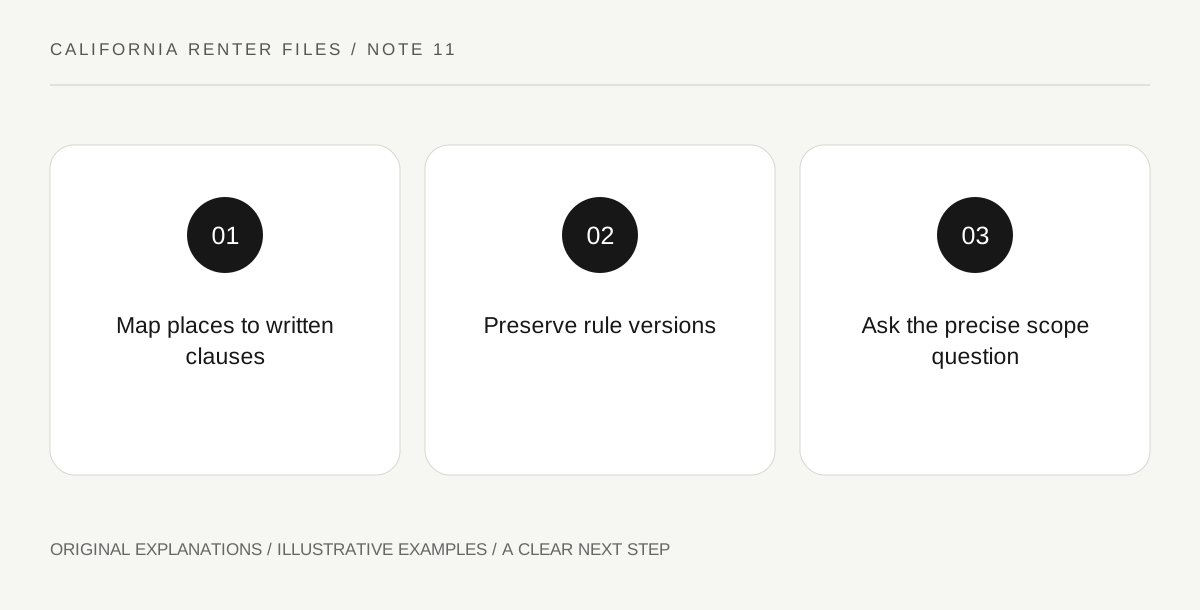
Original explanatory diagram. Read the full method and limitations below.
Begin with the written scope
DRE’s 2026 guide explains that a landlord may prohibit smoking and must specify prohibited areas in the agreement when doing so; later changes involve notice questions. Use that limited context to read the actual documents. Do not assume a prohibition inside a unit automatically describes every exterior or common area, or that a permissive lease term overrides every applicable local rule. Coverage and enforceability require the actual wording, jurisdiction and circumstances.
Build a location matrix without inventing permission
List the places relevant to the question: unit interior, balcony, entry or another identified area. Beside each, reference the actual clause, sign or current official local information. Use unclear where the documents do not answer the question. An empty cell is not permission. This matrix can expose a genuine mismatch, such as a sign whose scope is not explained by the copy of the rules you received, while preserving the original documents for an appropriate review.
Keep the document sequence visible
Save the original agreement, referenced rules and any later notice with receipt dates. Do not silently replace an old rule file with a new photograph and lose the sequence. If a change is disputed, seek qualified advice about the actual process rather than calculating a notice period from this article. A neighbor’s informal explanation can be recorded as a report, but it should not be treated as the authoritative text governing another household’s obligations.
Report a concern without staging an investigation
Use the actual management or appropriate local process for a concern and describe what you personally observed without confronting others or entering private areas. Keep health questions with qualified health professionals. End with the specific place, document conflict and question needing an answer. The file should clarify the rule, not become an improvised enforcement operation or an assumption that the tenant may stop complying with other rental duties while the issue is reviewed.
Illustrative renter file
Illustrative matrix: a tenant’s agreement identifies the interior, while a later sign refers broadly to the property. The tenant keeps both versions and marks the balcony question unclear. Management is asked to identify the current written scope and any change process. The example neither grants permission from an empty matrix cell nor decides whether a particular notice or local restriction is legally sufficient.
Questions that come up
Does this guide say smoking is permitted wherever the lease is silent?
No. Silence does not settle applicable local rules or other legal questions. Obtain appropriate clarification about the actual property and activity.
Does a new sign alone resolve the legal effect of a change?
No such conclusion is supplied here. Preserve the documents and ask about the actual rule, notice and applicable law.
References and scope
These sources support the factual background. Examples and exercises are original illustrative teaching material. References do not imply endorsement.
- California DRE: California Tenants, 2026 edition, rental terms and smoking — Smoking-location and later-notice rules only.