A mold test report: ask whether it answers the moisture question
A laboratory report can make a dampness dispute look resolved even when the source of moisture remains unexplained. Read the report’s actual scope before treating it as a clearance certificate or a personal health diagnosis. This guide organizes questions about evidence and responsible follow-up, without prescribing mold removal, chemical use, building work or medical treatment.
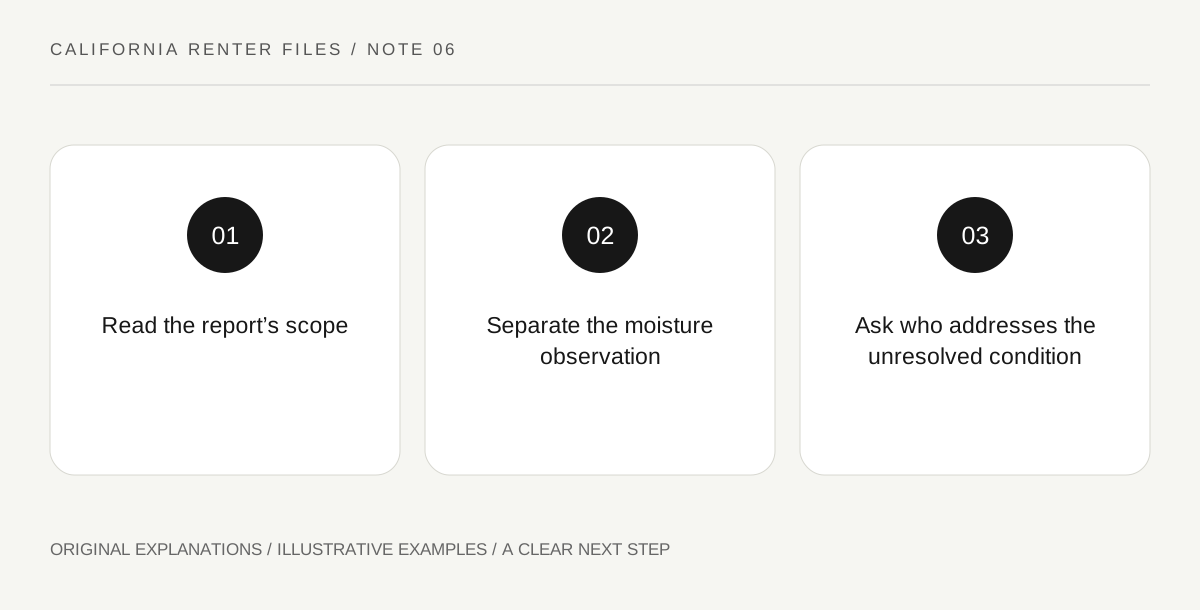
Original explanatory diagram. Read the full method and limitations below.
Start with the public-health distinction
CDPH’s mold guidance cautions against treating mold-test results as a measure of health risk and emphasizes recognizing moisture or mold problems. Use that distinction to identify what a report actually claims. Record the provider, date, sampled location and stated purpose where supplied. A technical-looking result should not silently become a conclusion about every room, every surface or a resident’s symptoms. Keep the original report and its limitations intact rather than saving only a reassuring sentence from an email.
Separate condition evidence from laboratory data
Make two headings: observed conditions and report findings. Under the first, record the damp area, odor or other specific observation without assigning a species or cause. Under the second, summarize only what the report establishes. Identify where the two do not answer the same question. For example, a report may not explain why a particular area repeatedly becomes wet. That is a question for an appropriate qualified building investigation, not a reason for the tenant to open a wall or improvise a cleanup.
Ask who addresses the underlying issue
Use management’s actual process to ask about the responsible assessment and work plan, and obtain appropriate local code or legal help if needed. Keep health concerns with qualified health professionals. This article supplies no habitability determination, rent remedy or remediation method. Do not assume that the company selling a test has established the legal sufficiency of a repair. A clear question distinguishes what the result says from who is responsible for evaluating and addressing the condition in the actual home.
Keep the closure claim appropriately narrow
When a response says resolved or cleared, ask what evidence and area that statement concerns. Save the answer with the report rather than translating it into a broader guarantee. If a problem remains or returns, preserve the specific observation and seek appropriate follow-up promptly. The useful file does not need a tenant-made scientific verdict. It needs a readable distinction among the condition, the test and the proposed response, so technical vocabulary does not replace a clear account of what has and has not been addressed.
Illustrative renter file
Illustrative file: a resident receives a report about one sampled room while a separate damp patch continues to recur. The file keeps the laboratory result under its stated scope and records the recurring observation separately. Management is asked about the responsible moisture assessment. The resident does not call the whole apartment cleared, diagnose a health condition from the report or open the wall to investigate.
Questions that come up
Does a test result diagnose a resident’s symptoms?
No such use is supported here. Discuss symptoms with a qualified health professional rather than treating a building report as a personal medical assessment.
Does the article authorize rent withholding or remediation work?
No. Actual remedies and work arrangements require review of the facts, applicable law and qualified professional guidance.
References and scope
These sources support the factual background. Examples and exercises are original illustrative teaching material. References do not imply endorsement.
- CDPH: Frequently Asked Questions about Mold — Limits of mold-test health interpretations and attention to moisture/mold evidence; no medical diagnosis, clearance, legal remedy or cleanup instructions.