A lease negotiated in another language: preserve the negotiation, not just the final form
An English lease form does not tell the whole story when the actual negotiation took place in another language. Preserve how the terms were discussed before asking about California’s translation requirements. The useful file distinguishes negotiation language, proposed documents and any interpreter arrangement, without assuming a machine translation or a bilingual relative automatically resolves the legal question.
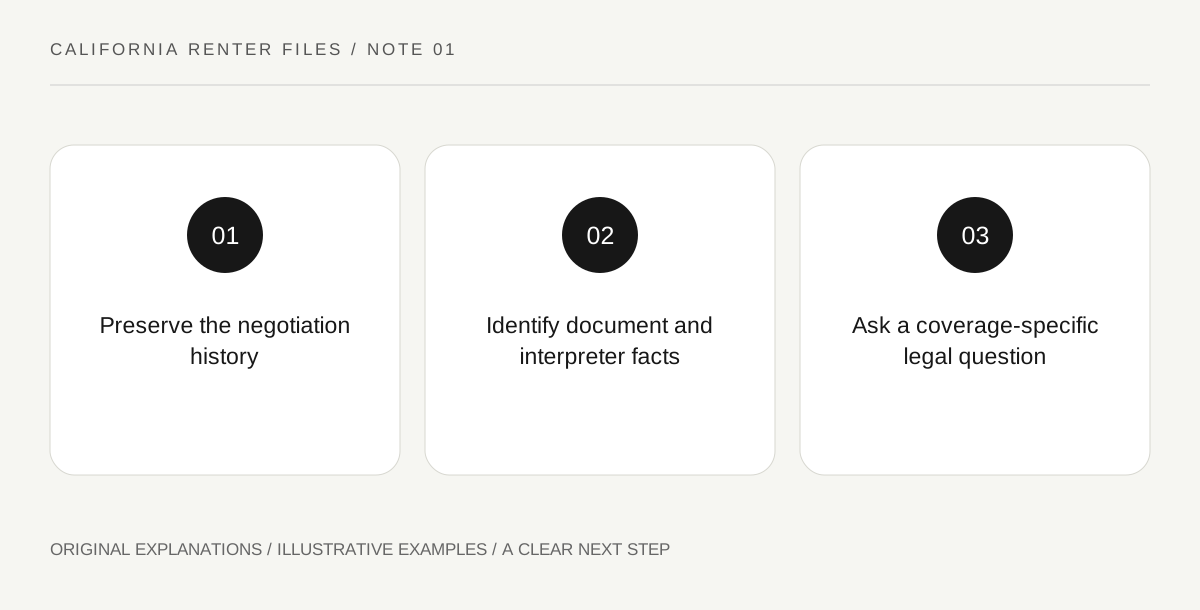
Original explanatory diagram. Read the full method and limitations below.
Identify the particular translation question
DRE’s 2026 tenant guide describes translation duties for certain residential agreements negotiated in Spanish, Chinese, Tagalog, Vietnamese or Korean, with scope limits and an interpreter exception. That is more specific than a rule based only on the tenant’s preferred language. Record which language was actually used to negotiate terms and by whom. Do not treat this short account as a determination that a particular agreement is covered or that a particular interpreter arrangement satisfies the exception.
Keep the sequence of documents
Save the advertisement, relevant negotiation messages, proposed lease and any translated version in their original form. Note when each was received and whether the proposed terms changed. A translation of an earlier draft may not explain a later revision, so keep version identities visible. Avoid editing the original messages to make the language history look simpler. A short chronology can distinguish what was discussed before signing from a document supplied afterward without claiming that the chronology alone decides the legal effect.
Describe an interpreter’s role accurately
If someone assisted, record who arranged their involvement, what they did and which discussion they joined. Do not label them legally qualified or disqualified based solely on being a friend, relative or fluent speaker. The actual rule and facts need review. A personal machine translation may help identify questions, but should not be described as the landlord’s legally sufficient translation or as a substitute for understanding the proposed agreement. Keep uncertain passages identified for appropriate language and legal assistance.
Ask for advice before choosing a remedy
Bring the file to an appropriate qualified adviser if a requirement or consequence is disputed. Ask about coverage, document timing and the actual interpreter facts rather than requesting a blanket answer for all non-English negotiations. This article supplies no rescission notice or instruction to stop paying rent. If signing or another deadline is imminent, seek help promptly rather than waiting to perfect the file. The goal is a clear factual basis for the translation question, not a self-issued legal conclusion.
Illustrative renter file
Illustrative chronology: an applicant discusses rent and a term in Chinese by message, receives an English draft and later receives a changed draft. A relative helped during one call but not the message exchange. The file preserves each version and the actual assistance history. A qualified adviser reviews the translation question; the applicant does not call a machine-translated page automatically sufficient or declare the lease canceled from this example.
Questions that come up
Does preferred language alone decide the requirement?
The guide describes a more specific negotiation-based rule with limits. Obtain advice about the actual facts rather than assuming preference alone establishes coverage.
Does this article authorize cancellation of a signed lease?
No. Legal consequences and any remedy require review of the actual agreement, facts and current law. Seek timely qualified advice before acting.
References and scope
These sources support the factual background. Examples and exercises are original illustrative teaching material. References do not imply endorsement.
- California DRE: California Tenants, 2026 edition, translation section — Translation-rule scope only.