Suspected bed bugs: organize reporting and professional coordination without a DIY treatment plan
A suspected bed-bug problem can trigger rushed purchases, blame and movement of belongings before the situation is properly assessed. Focus first on a clear report and the responsible professional process. This guide organizes communications and confirmed instructions; it does not identify insects, diagnose skin marks, select pesticides or prescribe how belongings should be treated.
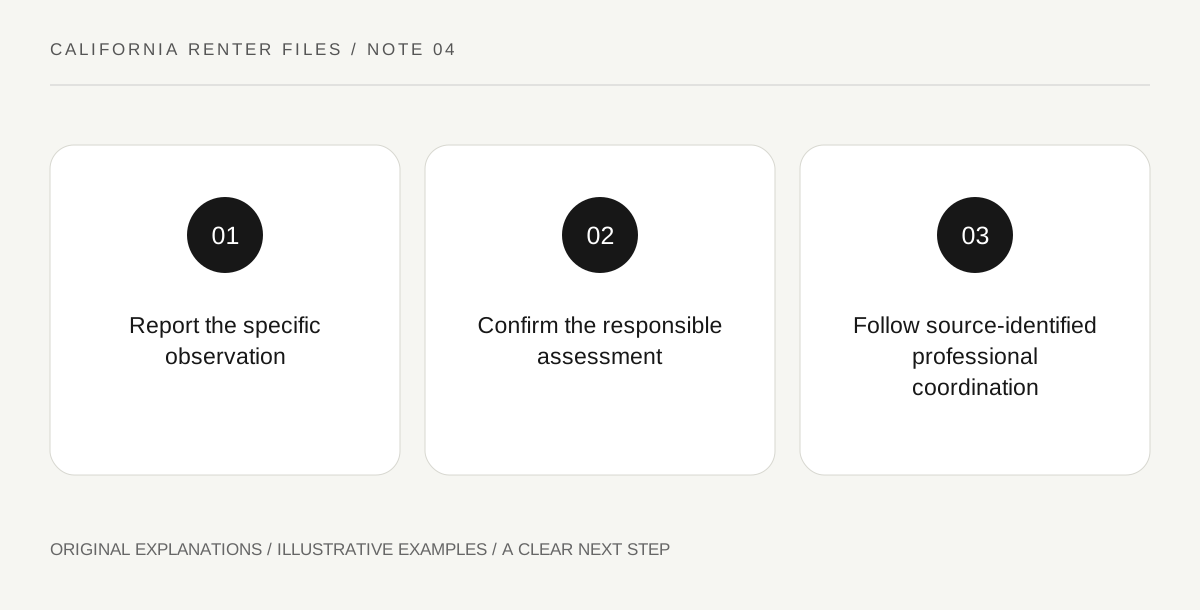
Original explanatory diagram. Read the full method and limitations below.
Keep suspicion distinct from confirmation
CDPH’s property-owner and tenant guidance emphasizes reporting, management coordination and licensed pest-control involvement. Use that framework without treating a photograph or a bite mark as your own definitive identification. Record what was actually noticed, where and when, in plain language. If there is a health concern, seek appropriate medical advice separately. A housing record should not become a medical diagnosis, and a person’s cleanliness should not be guessed from a suspected pest report.
Make the reporting route explicit
Use the actual management contact and preserve the report and response. Ask who will arrange assessment and how the findings and next instructions will be communicated. Do not invent a treatment deadline from a broad article or assume a neighbor has authority to direct work in the unit. A clear file identifies the responsible contact and the current confirmed step. If the matter is disputed, appropriate local code or legal assistance can review the actual duties and process.
Use only the confirmed professional preparation
Ask the responsible licensed provider for instructions relevant to the actual unit and treatment process. This article supplies no laundering, heating, chemical or disposal method. Do not mix products or move belongings into shared areas merely to make the apartment look ready. A generic internet checklist can conflict with a provider’s plan or affect other households. If an instruction is unclear or impossible to follow, tell the provider and management rather than silently improvising a substitute.
Keep a coordination log rather than a blame ledger
Record appointments, findings and instructions with their source and date. Distinguish a professional finding from a resident’s concern or an informal message. Protect neighbors’ privacy and avoid public accusations about where the problem began. The useful outcome is a comprehensible sequence of reporting and responsible action, not an unqualified conclusion about liability. Seek timely qualified help if the arrangement stalls or a housing dispute develops, while preserving the original file without letting recordkeeping delay necessary care or reporting.
Illustrative renter file
Illustrative log: a resident notices an unfamiliar insect and sends a factual report to management. The assessment is arranged through a licensed provider. One preparation instruction is unclear, so the resident asks for clarification before acting. The file labels the initial observation as suspected and later findings by their actual source. It contains no homemade pesticide recipe, skin diagnosis or accusation about a neighboring household.
Questions that come up
Can skin marks alone establish bed bugs?
This article provides no diagnostic or insect-identification method. Seek appropriate professional assessment for the housing concern and medical advice for a health concern.
Should I use a generic treatment checklist before the provider responds?
Do not substitute this guide or an unrelated checklist for the actual professional process. Ask about unclear instructions rather than improvising chemicals or disposal.
References and scope
These sources support the factual background. Examples and exercises are original illustrative teaching material. References do not imply endorsement.
- CDPH: Bed Bug Infestation Guidance for Property Owners and Tenants in California — Reporting/management coordination and licensed pest-control involvement; no insect diagnosis, fixed response deadline or treatment method.