A Los Angeles harassment concern: describe the conduct and its actual impact
A repeated housing problem can be difficult to explain when every incident is summarized as harassment without its details. For a property in the City of Los Angeles, organize the actual conduct, relevant communications and concrete impact before using the city’s current process. The file supports review without deciding that every dispute satisfies the ordinance or promising a particular legal result.
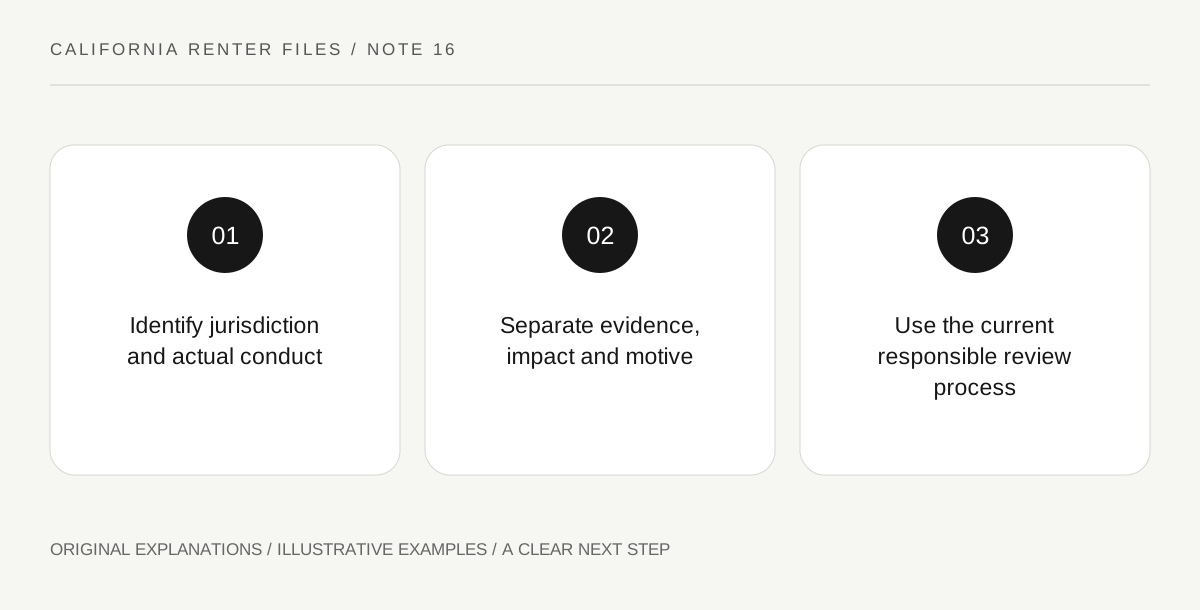
Original explanatory diagram. Read the full method and limitations below.
Use the correct city’s protection resource
LAHD’s current Tenant Anti-Harassment page describes prohibited bad-faith landlord conduct and an official complaint route. Confirm City of Los Angeles jurisdiction rather than assuming an LA mailing address settles it. The ordinance has a particular scope and legal elements; this article does not decide them. Identify what happened in plain language first. A problem may deserve attention even when the correct legal category or agency has not yet been determined by a qualified reviewer.
Give each incident a factual entry
Record the date, place, people involved and the action personally observed. Link existing messages or documents without editing the original. If another resident reports an event, identify it as their report and seek permission before sharing personal information. Do not provoke a confrontation to obtain a clearer example, enter private space or secretly record based on this guide. The file should preserve events that occurred, not create a risky investigation to make a legal label more persuasive.
Explain the impact separately from motive
Describe the actual practical effect, such as a documented service interruption or an inability to use an agreed facility, where that is what happened. Keep a claim about motive separate unless there is evidence to report. A strong factual account can state uncertainty. Avoid copying a long list of ordinance categories into the file as if every listed act occurred. The reviewer needs the conduct and its effect, not an inflated allegation that makes the real sequence harder to understand.
Use the official route without losing other urgent questions
Follow LAHD’s current intake instructions and seek timely qualified legal advice for the actual situation. Address immediate safety appropriately, and do not ignore a court paper or other deadline while waiting for a complaint response. A complaint submission does not itself establish liability or supply every remedy. Preserve confirmation and the materials actually sent. The useful outcome is a city-specific, evidence-linked account that can be reviewed, with the actual impact visible and the legal conclusion left to the proper process.
Illustrative renter file
Illustrative file: a City of Los Angeles tenant records three distinct incidents, each with a date and existing supporting communication. The effects are described separately from suspected motive. An unrelated category from an online checklist is left out because it did not occur. The tenant uses the current official intake route and seeks advice about a separate document rather than assuming the complaint suspends every other requirement.
Questions that come up
Does calling conduct harassment establish the legal elements?
No. The ordinance and facts require review. Describe what actually happened and preserve the evidence without overstating the conclusion.
Does filing a city complaint automatically stop a court deadline?
Do not assume that. Seek prompt qualified help for the actual court document or deadline as well as the complaint process.
References and scope
These sources support the factual background. Examples and exercises are original illustrative teaching material. References do not imply endorsement.
- Los Angeles Housing Department: Tenant Anti-Harassment Ordinance — The current city description of bad-faith conduct protections and complaint route; no case finding, remedy amount or deadline suspension.