A San Francisco Ellis notice: distinguish rental withdrawal from a property sale
A building sale, an owner’s future plan and an Ellis Act withdrawal are different events. If a San Francisco communication invokes Ellis, identify the actual process and documents before translating the phrase into a move date. The useful file separates ownership information, claimed withdrawal and tenant-specific questions, without calculating a deadline or assuming every sale ends a tenancy.
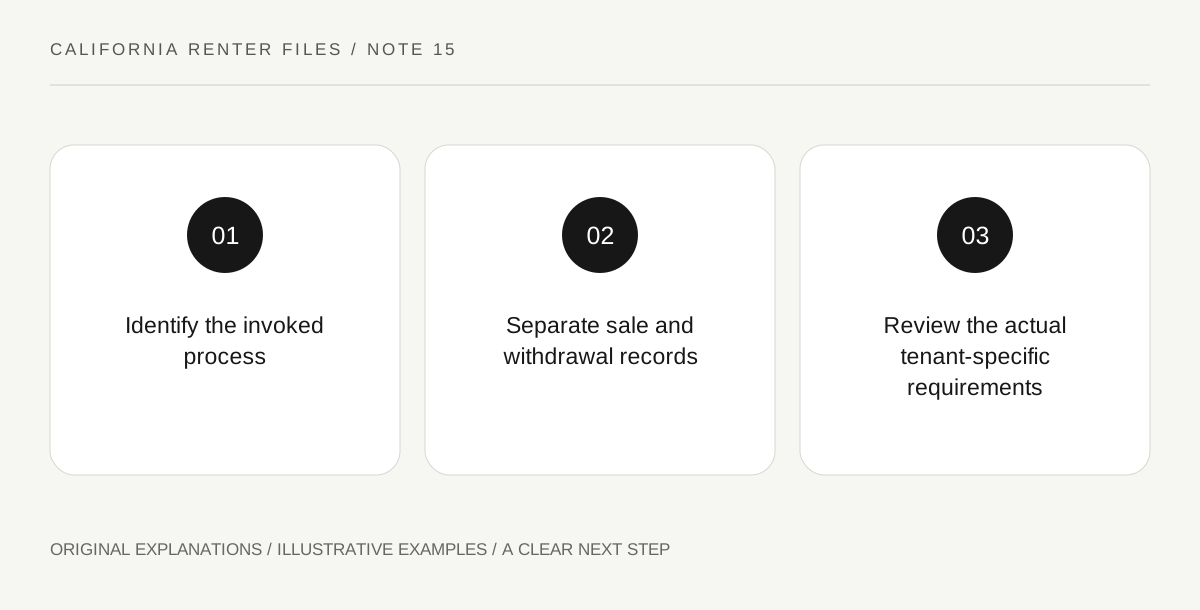
Original explanatory diagram. Read the full method and limitations below.
Identify the process actually invoked
The San Francisco Rent Board’s 2026 Ellis packet describes a formal process for withdrawing rental units from the market, including filings and tenant notices. This is more specific than an owner saying the property may be sold. Record the exact document title and what it states. Do not infer that a sale listing is an Ellis filing or that mentioning the word Ellis proves every requirement has been met. The actual facts and current rules need qualified review.
Keep the different documents in separate groups
Create groups for ownership or sale communications, Rent Board-related documents and notices addressed to the tenant. Preserve envelopes and existing delivery information where available without calculating service consequences yourself. Note when a document was received and which property or unit it identifies. A report about another tenant’s notice is not a substitute for your own document. The file should reveal what is actually known rather than make several different events appear to be one continuous legal step.
Raise tenant-specific questions promptly
Ask the Rent Board and appropriate legal assistance about the actual filing, applicable protections, any extension or relocation issue and the response required. Share sensitive eligibility information only through an appropriate process. This article decides none of those questions and supplies no general move date. Do not wait for a neighbor’s outcome or assume a landlord’s summary has evaluated every relevant personal circumstance. Prompt review matters more than producing a perfectly formatted packet.
Keep practical planning from becoming a legal admission
You may need to explore options while seeking advice, but a household planning note is not a substitute for an informed response to actual documents. Obtain qualified guidance before signing an agreement or surrendering rights in a disputed situation. Preserve any professional instructions alongside the file. The useful distinction is clear: a sale concerns ownership, while a claimed Ellis withdrawal invokes a particular rental-market process. Understanding that difference helps frame the right questions without pretending a short article can determine the outcome for a specific tenancy.
Illustrative renter file
Illustrative file: a tenant first receives a sale-related email and later a document invoking Ellis. They place them in different groups and record actual receipt information. The Rent Board and legal assistance are asked about the specific process and tenant questions. No deadline is borrowed from a neighbor, and the sale email is not treated as either a completed withdrawal or a reason to surrender possession immediately.
Questions that come up
Does a property sale automatically establish an Ellis withdrawal?
No such conclusion follows. The Rent Board describes a specific withdrawal process with its own documents and requirements.
Does this article determine when a tenant must move?
No. Timing and rights depend on the actual process, documents and circumstances. Obtain timely qualified assistance rather than using a generic date.
References and scope
These sources support the factual background. Examples and exercises are original illustrative teaching material. References do not imply endorsement.
- San Francisco Rent Board: Landlord Ellis Packet, February 2026 — The formal rental-withdrawal filing/notice process as distinct from a sale; no personal deadline, extension or relocation determination.