Santa Monica temporary relocation: keep the temporary arrangement distinct from ending the tenancy
Leaving a unit for work or an official condition can involve a temporary relocation arrangement rather than an ordinary permanent move. In Santa Monica, identify the reason, responsible process and written terms before treating a hotel booking as the whole plan. The useful file distinguishes where the household stays from what is happening to the tenancy itself.
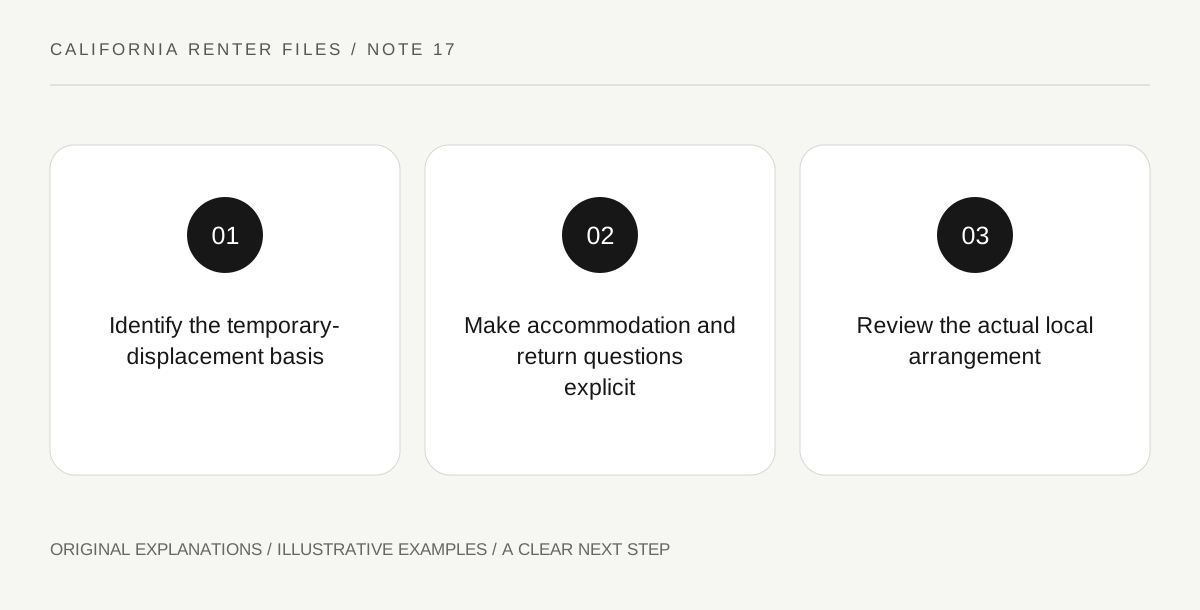
Original explanatory diagram. Read the full method and limitations below.
Read the city’s conditional assistance framework
Santa Monica’s official temporary-relocation guidance describes assistance under specified circumstances and distinguishes temporary displacement from legal termination of a tenancy. This is a local framework, not a guarantee that every inconvenience qualifies or that one published amount applies forever. Confirm the exact property’s jurisdiction and the actual reason the household is expected to leave. Keep an official instruction, a proposed work plan and an informal landlord suggestion as separate kinds of evidence.
Write the temporary arrangement in concrete terms
Identify the proposed accommodation, expected period and the responsible contacts. Ask through the actual city or qualified advice process about applicable assistance, accessibility and household needs. This article determines no payment, entitlement or comparable-housing finding. Do not assume a reservation alone resolves transport, permitted pets, access or an extension if work takes longer. The file should make the proposed arrangement concrete enough for review without silently accepting conditions the household does not understand.
Keep the return question visible
Record how updates about work and possible return will be provided, and who is responsible for clarifying the actual status. Avoid treating an estimated completion date as a guarantee or making a personal habitability determination from a quick look. A temporary accommodation plan should not be used as an unexplained substitute for tenancy documents. Seek advice before signing a disputed agreement or surrendering rights; this worksheet supplies no move-out, termination or rent-payment instruction.
Preserve changes as changes
If the arrangement is extended or altered, keep the revised communication with the original version and date. Do not overwrite the first plan and lose the history of what was agreed or proposed. Ask the responsible city service and qualified adviser about unresolved benefits or obligations. The practical outcome is a readable temporary-relocation file, with accommodation, ongoing tenancy and return questions distinct. That can reduce confusion without pretending the article has adjudicated which party owes what in a particular case.
Illustrative renter file
Illustrative plan: a Santa Monica household receives a proposed short temporary stay during work. They record the actual reason, accommodation and update contact, then ask the responsible city service about the arrangement’s scope. A later extension is saved as a new version. The household does not assume the reservation ends the tenancy or that an estimated return date establishes the unit’s condition.
Questions that come up
Does a hotel booking itself terminate the tenancy?
Do not infer that. Temporary accommodation and legal termination are different questions that need the actual documents and appropriate advice.
Does this article set a relocation payment amount?
No. Applicable assistance and current amounts require the responsible city process and the actual facts, not a generic worksheet.
References and scope
These sources support the factual background. Examples and exercises are original illustrative teaching material. References do not imply endorsement.
- City of Santa Monica: Temporary Tenant Relocation Assistance FAQ, July 2025 — Conditional temporary-relocation assistance and distinction from legal tenancy termination; no personal benefit, payment or habitability determination.