A periodic pest-control notice: connect the document to the actual service
A pest-control notice can be mistaken for an appointment confirmation, a complete preparation guide or proof that no further question is needed. Identify the actual service and the document’s role first. This file helps a renter connect notice, provider and instructions without selecting a pesticide, deciding personal medical suitability or improvising how the unit should be prepared.
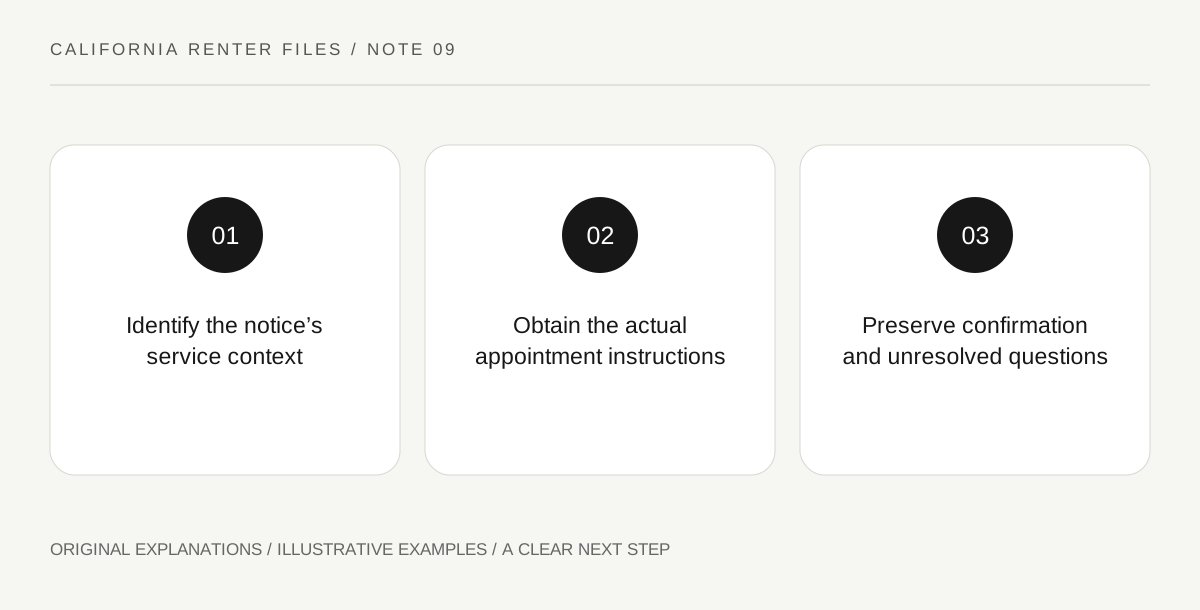
Original explanatory diagram. Read the full method and limitations below.
Read the notice within its service context
DRE’s 2026 guide describes notice duties associated with an initial treatment under an ongoing pest-control contract and supplying that notice to new covered tenants. The service context matters. Keep the actual notice with the provider identity and the part of the property it concerns. Do not assume a general annual sheet confirms the date, location or method of a separate proposed treatment. This article does not determine whether every legal notice requirement has been met in a particular case.
Separate notice from preparation directions
Make one field for the information document and another for the specific appointment and preparation instructions actually issued. If they refer to different dates or providers, ask for clarification. Avoid combining a neighbor’s checklist with the actual provider’s directions. A tenant should not need to guess which document controls a practical step. The useful question is whether the responsible provider has clearly explained the service that is actually planned, through an appropriate current process.
Raise household needs through the responsible route
Tell management and the actual provider about relevant access or scheduling questions, and use appropriate health advice for a personal medical concern. This article supplies no evacuation duration, reentry time, chemical handling or pet-care instruction. Do not infer a safe return time from an odor or from how quickly someone else reentered another unit. Ask the responsible provider to explain the actual instructions and raise any inability to follow them before silently substituting a different arrangement.
Keep confirmation and completion distinct
Record the confirmed appointment, the instructions received and any later provider communication. Do not label a planned service completed merely because the notice was delivered. Preserve any unresolved issue for the responsible management, licensing or housing authority as appropriate. The file’s value lies in connecting the document to a specific service, so legal and practical questions do not disappear inside a generic sheet. It does not authorize a tenant-selected treatment or decide a remedy for a disputed notice.
Illustrative renter file
Illustrative file: a new tenant receives an ongoing-service notice, then later gets a message about a particular appointment. The provider names differ, so the tenant asks management to clarify before combining the documents. Actual preparation and return instructions come from the responsible provider. The file records the confirmed service without inventing a pesticide method, medical clearance or universal time away from the unit.
Questions that come up
Does a notice alone prove treatment occurred?
No. A document about a planned or ongoing service and a record of completion are different things.
Can I infer reentry safety from smell or another tenant’s experience?
No such inference is supplied here. Follow the responsible provider’s actual instructions and seek appropriate clarification for the real service.
References and scope
These sources support the factual background. Examples and exercises are original illustrative teaching material. References do not imply endorsement.
- California DRE: California Tenants, 2026 edition, periodic pest-control section — Ongoing-service notice duties only.