Disclosures and records3 min read
An English lease form does not tell the whole story when the actual negotiation took place in another language. Preserve how the terms were discussed before asking about California’s translation requirements. The useful file distinguishes negotiation language, proposed documents and any interpreter arrangement, without assuming a machine translation or a bilingual relative automatically resolves the legal question.
Read the guide ↗
Requests and boundaries3 min read
A housing communication that invokes immigration or citizenship can create fear beyond the rental dispute itself. Preserve the actual words and seek appropriate help while keeping sensitive information private. A focused record can identify the housing conduct at issue without turning a complaint into an unnecessary collection of family members’ documents or a public account of their status.
Read the guide ↗
Requests and boundaries3 min read
A military move can raise a federal lease question that differs from an ordinary early-exit charge in the contract. Prepare the lease and actual orders for qualified review rather than assuming any military connection automatically ends the tenancy. The key is a specific eligibility, notice and timing inquiry, with no deadline calculation or termination template supplied here.
Read the guide ↗
Household conditions3 min read
A suspected bed-bug problem can trigger rushed purchases, blame and movement of belongings before the situation is properly assessed. Focus first on a clear report and the responsible professional process. This guide organizes communications and confirmed instructions; it does not identify insects, diagnose skin marks, select pesticides or prescribe how belongings should be treated.
Read the guide ↗
Disclosures and records3 min read
A signed lead-paint disclosure can look like a safety certificate when it is actually a record of information supplied under a specific rule. Read what was disclosed and what remains unknown before treating the paperwork as proof about the home’s condition. This guide concerns document understanding, with no testing, paint disturbance or cleanup instructions.
Read the guide ↗
Household conditions3 min read
A laboratory report can make a dampness dispute look resolved even when the source of moisture remains unexplained. Read the report’s actual scope before treating it as a clearance certificate or a personal health diagnosis. This guide organizes questions about evidence and responsible follow-up, without prescribing mold removal, chemical use, building work or medical treatment.
Read the guide ↗
Household conditions3 min read
A smoke-alarm concern can be mishandled when an ordinary maintenance question becomes a tenant’s improvised electrical repair. Keep the device’s identity, manufacturer information and responsible contact available before a problem arises. This is a routine information task; an active alarm or suspected emergency requires the appropriate immediate response rather than documentation or online troubleshooting.
Read the guide ↗
Local processes3 min read
A freshly painted balcony can look reassuring without answering a structural inspection question. For a Berkeley rental, identify the city’s actual exterior-elevated-element program and the property-specific record rather than relying on appearance. The task is to ask the right administrative and professional questions, with no tenant-made load test, structural clearance or statewide deadline calculation.
Read the guide ↗
Disclosures and records3 min read
A pest-control notice can be mistaken for an appointment confirmation, a complete preparation guide or proof that no further question is needed. Identify the actual service and the document’s role first. This file helps a renter connect notice, provider and instructions without selecting a pesticide, deciding personal medical suitability or improvising how the unit should be prepared.
Read the guide ↗
Disclosures and records3 min read
A flood-related disclosure can be read as either a guarantee of danger or a guarantee that anything not named is risk-free. Treat it instead as a specific information document. Preserve the wording and property identity, then use the responsible current mapping and emergency resources for the different questions they answer, without turning a rental worksheet into a risk model.
Read the guide ↗
Requests and boundaries3 min read
A sign saying no smoking may leave questions about which places it covers and how it relates to the rental agreement. Read the actual rule and its version instead of assuming one statewide arrangement answers every property. This guide organizes a location-and-document comparison, without deciding enforceability, prescribing a lease change or giving personal health advice.
Read the guide ↗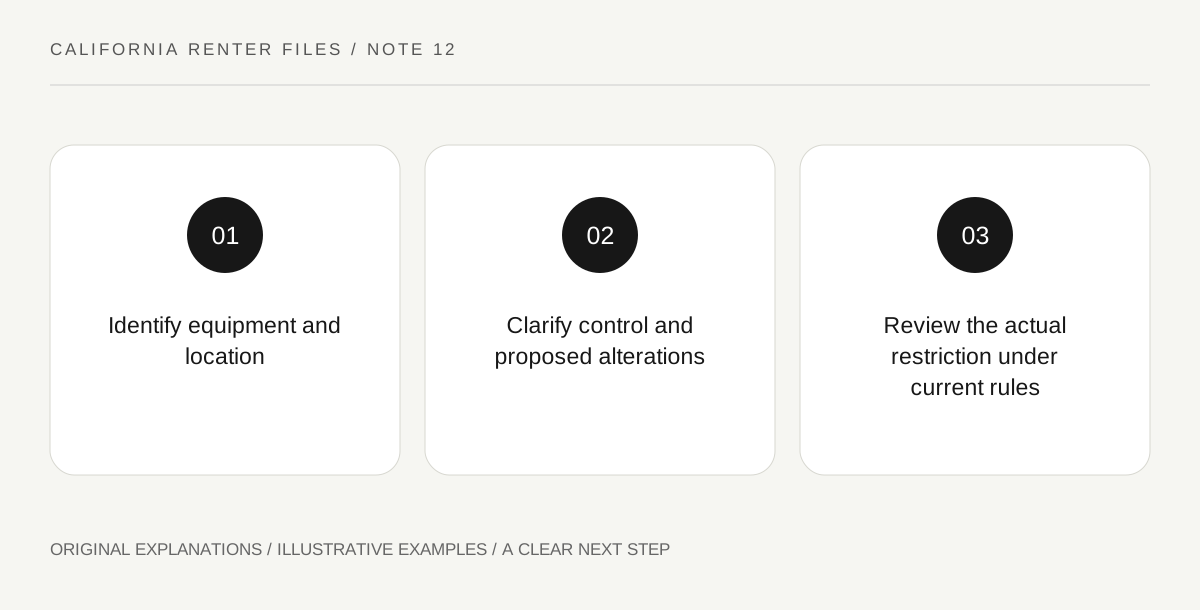
Requests and boundaries3 min read
An antenna rule can be misunderstood as either a complete ban or permission to attach equipment anywhere. Begin with the actual device and the area proposed for it. A focused request distinguishes exclusive-use property from common space and physical work, while leaving federal-rule coverage and technical suitability to appropriate current guidance and qualified review.
Read the guide ↗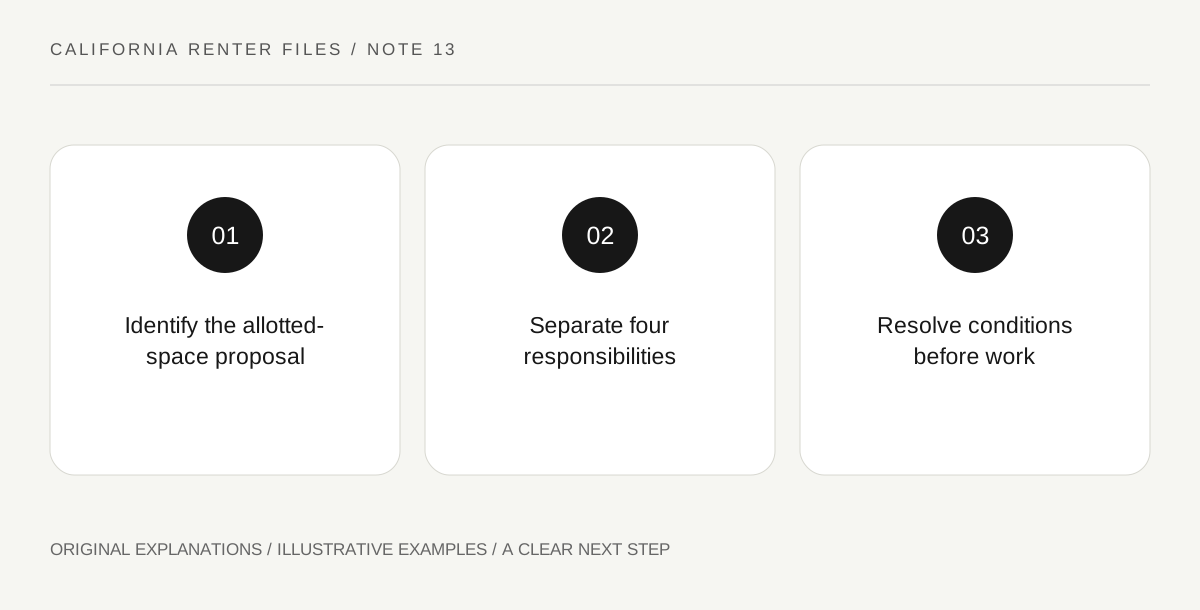
Requests and boundaries3 min read
An available parking space does not answer every question about installing or using an electric-vehicle charger. Build the request around four distinct roles: property permission, qualified electrical work, billing and the actual parking arrangement. The goal is a concrete reviewable proposal, without assuming a conditional legal rule provides a free installation or permission to run a cable wherever convenient.
Read the guide ↗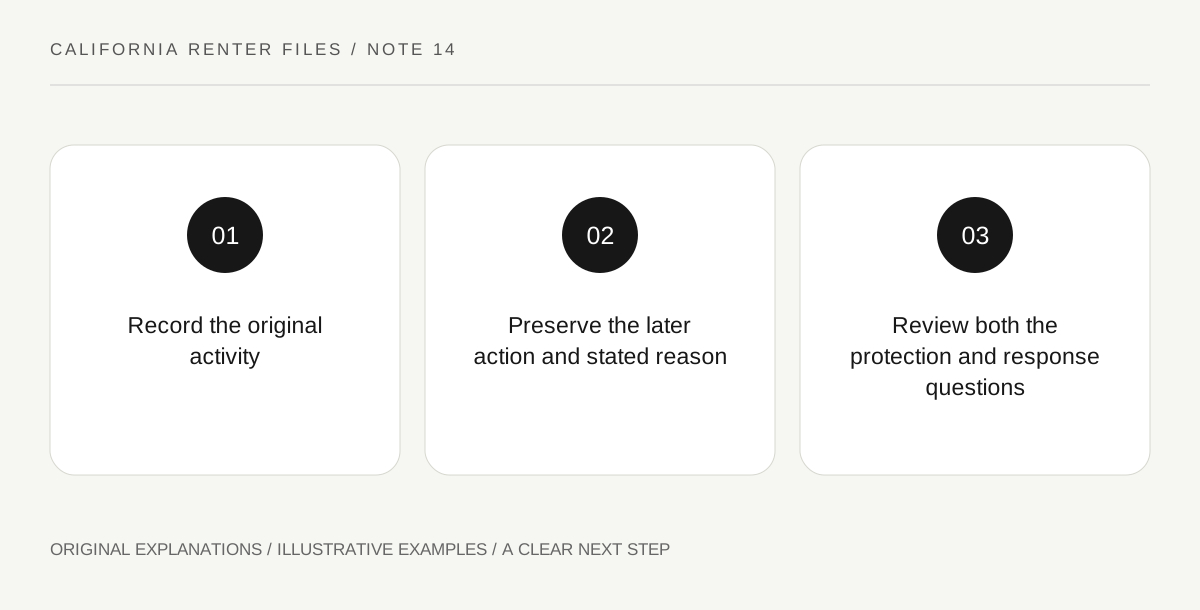
Requests and boundaries3 min read
An unfavorable housing action soon after a tenant raises a concern can feel self-explanatory. Preserve that sequence carefully, while keeping the protected activity, the later action and the available evidence distinct. A clear chronology helps qualified review; it does not automatically prove retaliation, determine a remedy or make an unrelated notice safe to ignore.
Read the guide ↗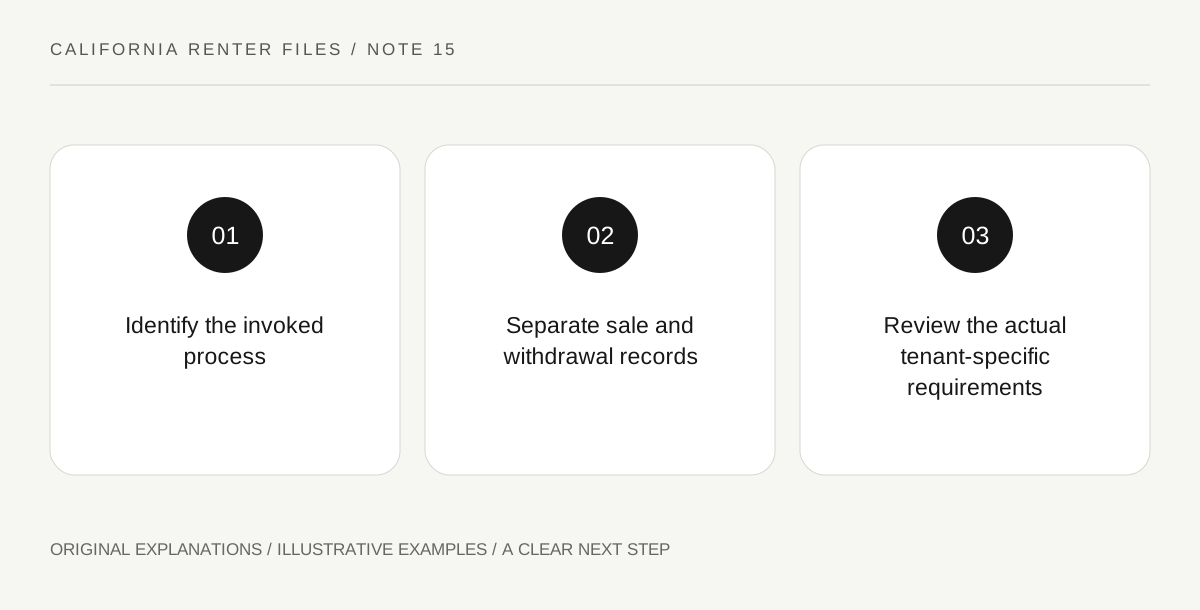
Local processes3 min read
A building sale, an owner’s future plan and an Ellis Act withdrawal are different events. If a San Francisco communication invokes Ellis, identify the actual process and documents before translating the phrase into a move date. The useful file separates ownership information, claimed withdrawal and tenant-specific questions, without calculating a deadline or assuming every sale ends a tenancy.
Read the guide ↗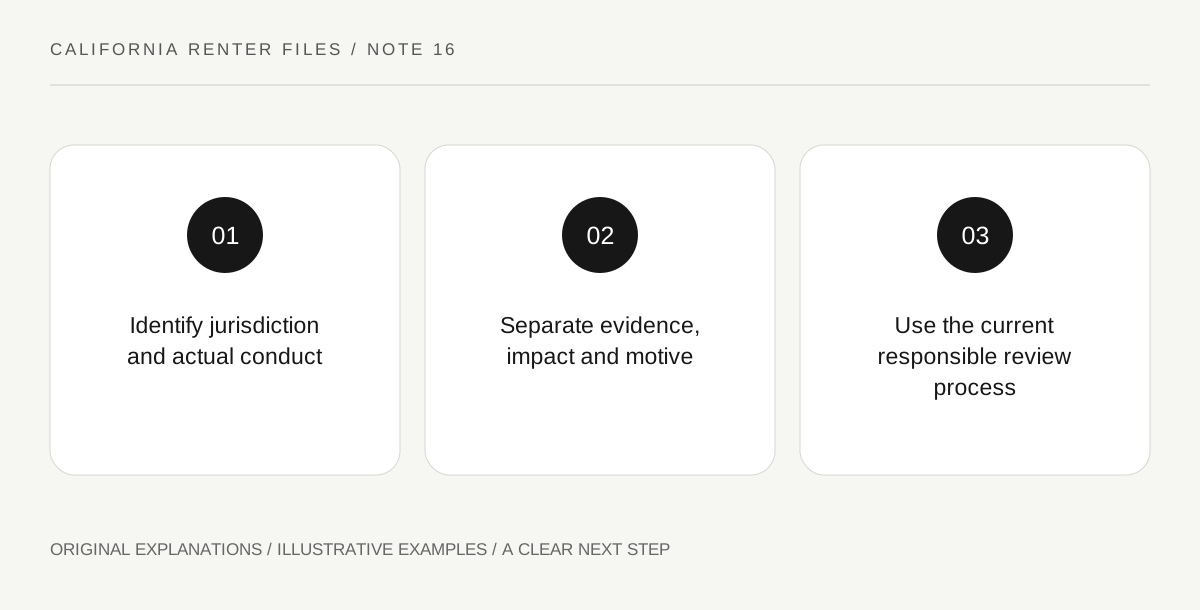
Local processes3 min read
A repeated housing problem can be difficult to explain when every incident is summarized as harassment without its details. For a property in the City of Los Angeles, organize the actual conduct, relevant communications and concrete impact before using the city’s current process. The file supports review without deciding that every dispute satisfies the ordinance or promising a particular legal result.
Read the guide ↗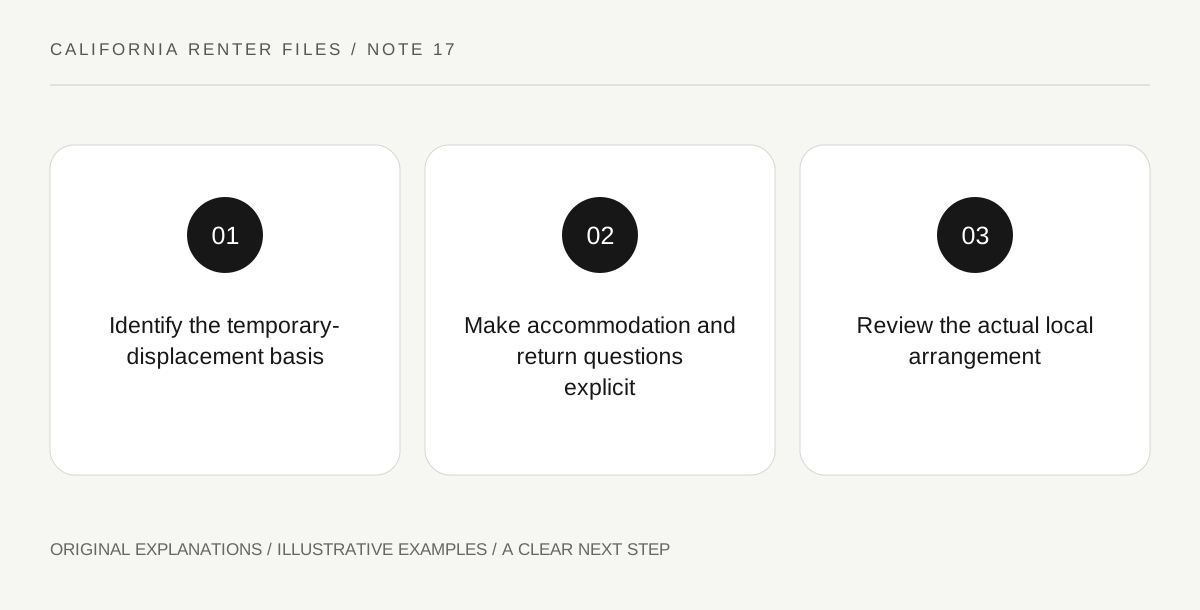
Local processes3 min read
Leaving a unit for work or an official condition can involve a temporary relocation arrangement rather than an ordinary permanent move. In Santa Monica, identify the reason, responsible process and written terms before treating a hotel booking as the whole plan. The useful file distinguishes where the household stays from what is happening to the tenancy itself.
Read the guide ↗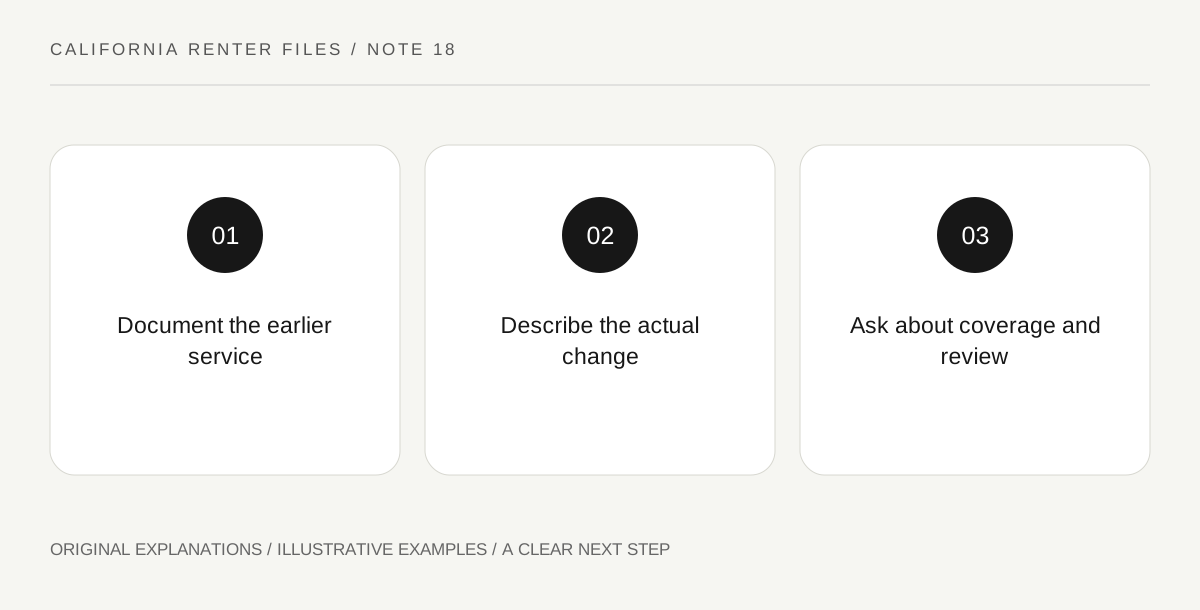
Local processes3 min read
A removed parking, storage or other service can create a different question from an ordinary repair request. For a potentially covered San José rental, establish what service was actually part of the arrangement and what changed before assigning it a dollar value. The file supports the city’s review process without authorizing a tenant-calculated rent deduction or promising petition eligibility.
Read the guide ↗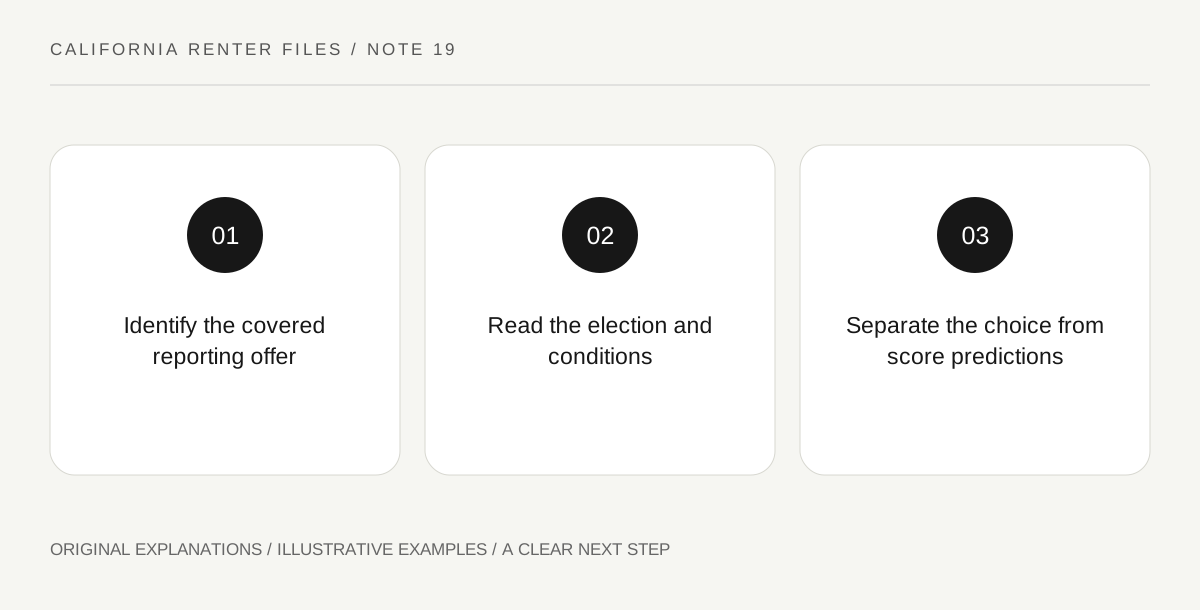
Disclosures and records3 min read
An offer to report rent payments can sound like a guaranteed credit improvement or a required addition to the lease. Read the actual election, service and applicable coverage first. A useful file distinguishes the reporting choice from ordinary rent obligations and preserves the terms without predicting a score change or deciding that every landlord must offer the same arrangement.
Read the guide ↗
Requests and boundaries3 min read
An advertisement or building rule about children can raise a different housing question from whether a household seems like a good fit. Preserve the actual wording and context before accepting a broad preference claim or making your own legal ruling. The file supports fair-housing review without inventing an occupancy limit or declaring every safety-related rule unlawful.
Read the guide ↗